VitisGP aims to predict grapevine traits from genomic data
VitisGP is a research dataset and benchmark designed to support the prediction of 26 grapevine traits from genetic variation. It could eventually help identify and breed cultivars for changing climate conditions, but the supplied material does not report results showing its practical accuracy.
- Source
- arXiv – Viticulture & Grapevine
- Published
- Reading time
- 2 min read
- Region
- International
What the research is about
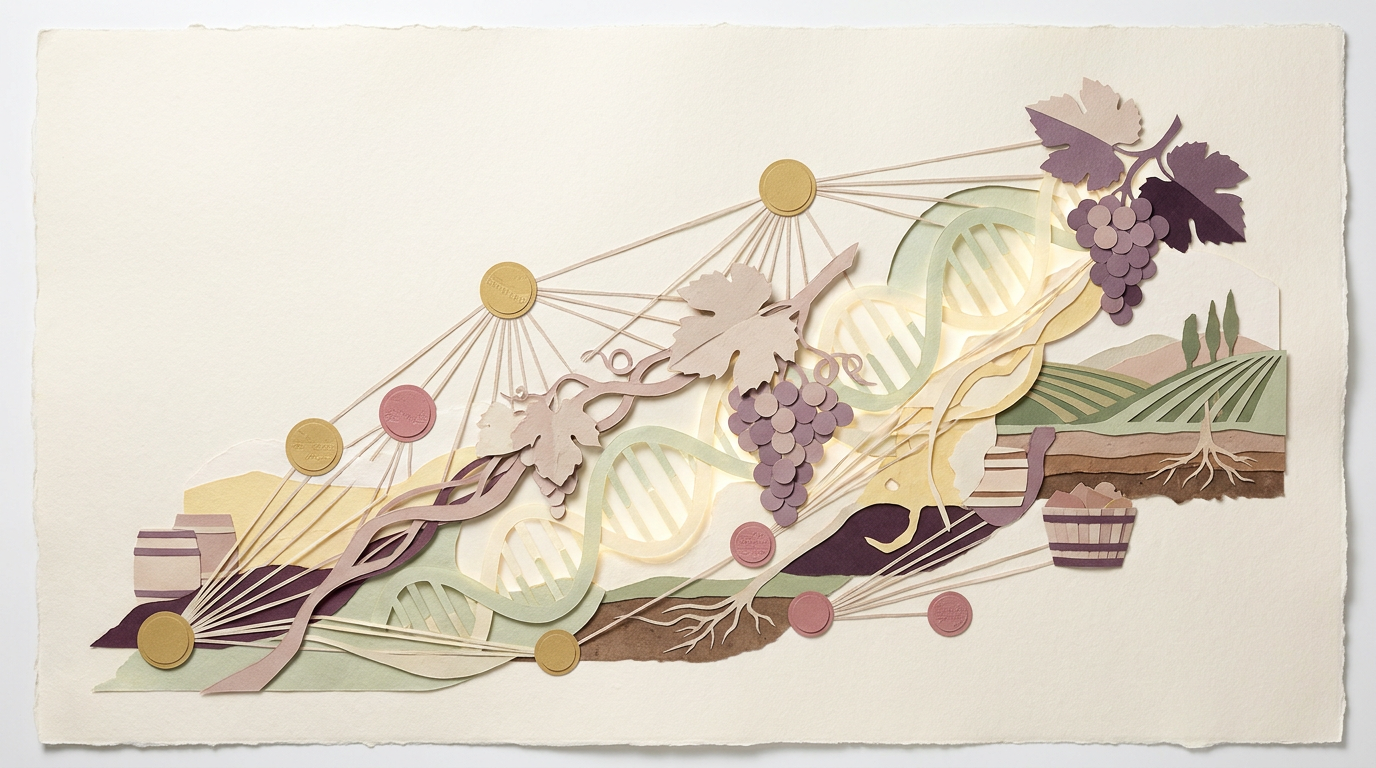
VitisGP is a curated, multi-phenotype dataset and benchmark for studying the relationship between grapevine genotype and phenotype. Genotype means the inherited genetic makeup, while phenotype refers to observable or measurable traits. Its purpose is to make it easier to compare how well machine-learning models can predict grapevine characteristics from genetic variation.
The researchers connected genome-wide SNP data with 26 different prediction tasks. An SNP is a difference in a single DNA building block between individuals. The tasks include 11 sommelier-curated aroma traits; the supplied excerpt does not provide the complete list of the remaining traits.
How it works
The benchmark offers a shared starting point for testing genotype-to-phenotype models. These models receive patterns of SNPs recorded across the genome and attempt to estimate individual phenotypes from them. “Multi-task” means that the resource brings together 26 prediction problems rather than concentrating on only one grapevine characteristic.
That is an important distinction from much of the earlier work described in the source. Machine-learning research on grapevine genotype–phenotype relationships has often focused on individual traits, isolated regions or a limited selection of predictive models. VitisGP is intended to provide a more consistent setting in which multiple tasks and modeling approaches can be compared. However, the supplied material does not report detailed model performance or practical accuracy figures.
Why it matters for vineyards and wineries
If genomic trait prediction becomes reliable, it could help researchers and breeders identify promising cultivars or breeding candidates earlier when responding to emerging environmental pressures. This could support cultivar selection and help breeding programs focus their resources. Predicting aroma-related characteristics might also be useful in research connected to desired wine styles.
VitisGP is a benchmark, however, not a ready-to-use vineyard decision tool. A genetic prediction alone cannot demonstrate that a cultivar will perform well at a particular site, in a particular vintage or under a specific management system. The supplied material does not state the overall sample size, explain how local growing conditions are handled, describe external validation, or show which of the 26 tasks can be predicted accurately enough for commercial use.
Growers and winery managers should therefore view the resource as research infrastructure rather than a replacement for field trials, local observations or winemaking assessments. Its immediate value lies in helping model developers evaluate methods more consistently. Any operational application would require evidence that predictions remain dependable beyond the data used to build and test the models.
What to watch next
A key next question is how models evaluated with VitisGP perform on previously unseen cultivars, regions and environmental conditions. It will also be important to see detailed results for all 26 tasks and whether genomic predictions are followed by measurements in vineyards and wineries. Practical value will depend on comparable accuracy, clearly stated limitations and validation under real growing and production conditions.
The original publisher and institution is arXiv – Viticulture & Grapevine.
Related articles
More stories from the same topic area.
Back to news Viticulture
VitisGP links grapevine genomes and phenotypes in a multi-task benchmark
VitisGP provides a common benchmark for predicting grapevine phenotypes from genomic variation. Its 26 tasks could support the identification and breeding of cultivars suited to emerging environmental pressures.
arXiv – Viticulture & Grapevine · 2 November 2026 · 1 min read
 Research
SEAMLESS Survey Examines Seven Nearby Dwarf Galaxies
SEAMLESS researchers studied six dwarf galaxies identified by the survey and a seventh system discovered serendipitously. New neutral-hydrogen observations complement the Hubble data.
arXiv – Wine, Grape & Oenology · 2 November 2026 · 2 min read
 Research
Good Fruit Grower Highlights Grape Stories in November Digital Issue
Good Fruit Grower’s November 2026 digital issue features selected stories about grapes. Full premium content, including photos, graphics and videos, requires community membership.
Good Fruit Grower · 1 November 2026 · 2 min read