Napa Jobs May Be Insulated From AI, but That Does Not Make Them Secure
An analysis of Napa County’s labor market finds that nearly half of local jobs are neither performed by AI today nor rated as suitable for it later. However, many of these generally lower-paid roles depend on a contracting wine industry and a flat visitor economy.
- Source
- Wine Industry Advisor
- Published
- Reading time
- 2 min read
- Region
- International
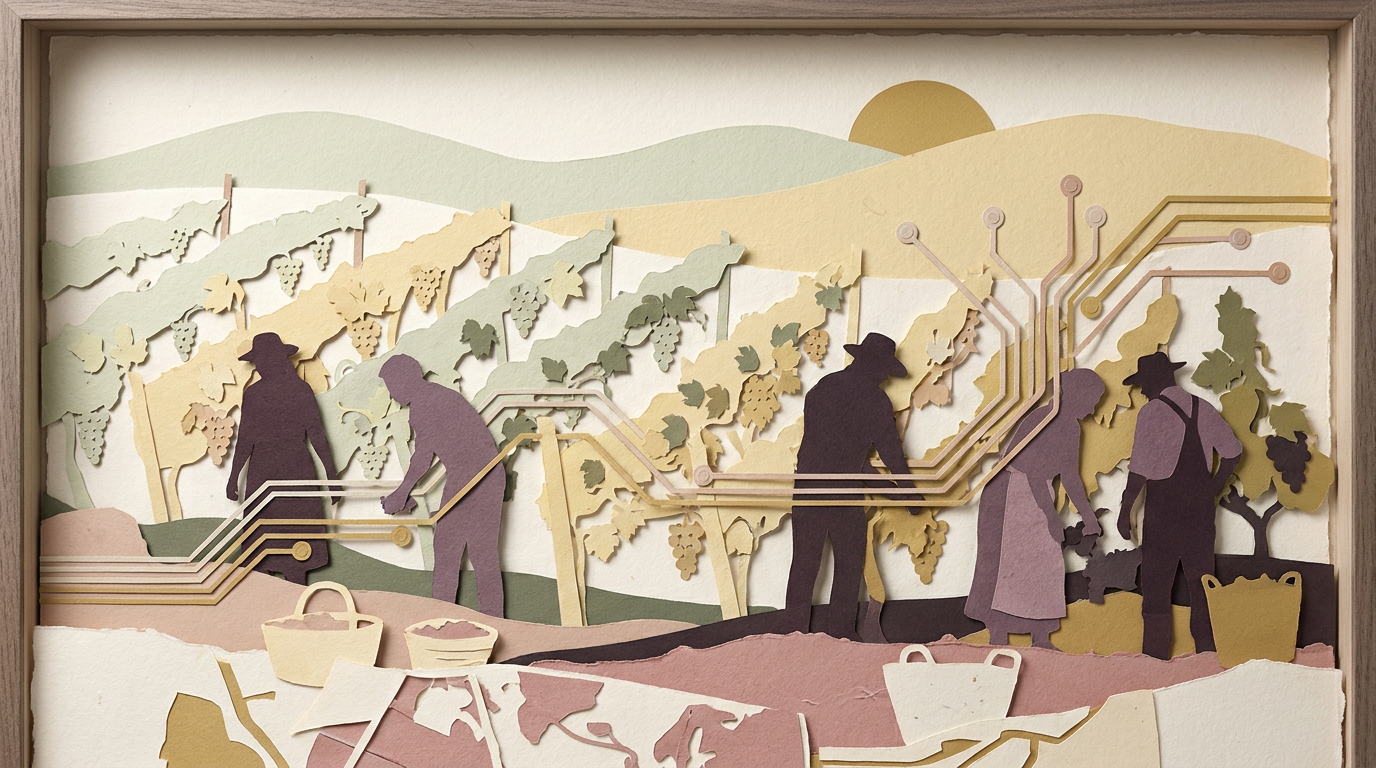
Distance from AI is not protection
Nearly half of Napa County’s jobs are in occupations that artificial intelligence is not performing today and is not rated as capable of doing later. At first glance, that finding may suggest that a substantial part of the local labor market is relatively sheltered from AI-driven automation.
However, the analysis also finds that these jobs pay the least. The largest occupational groups in this category include farm, food-service, production-line and housekeeping work. Such roles generally involve physical or on-site tasks that sit outside the typical uses of current generative AI tools.
Economic exposure in wine country
Being insulated from AI does not necessarily provide long-term employment security. Many of the occupations in the less AI-exposed group are connected directly or indirectly to Napa’s wine industry and visitor economy. According to the source, the wine industry is contracting, while the visitor economy is flat.
Workers whose jobs are less susceptible to AI may therefore remain vulnerable to other forms of economic pressure. Technical replaceability alone does not offer a complete measure of job stability. Demand conditions and the business outlook for wineries, hospitality and tourism also shape employment prospects in the county.
What the classification measures
The sorting method combines several different sources. Federal job counts provide the county-level employment figures, data from one AI company indicate how its tool is currently being used, and a 2023 academic rating is used to assess what such tools could potentially do.
About a quarter of Napa County jobs fall into a different category: AI is not doing this work now, but it is rated as able to do so. These occupations pay the most, according to the analysis. This creates a contrast between lower-paid work that appears technically insulated and higher-paid work that may face greater future exposure.
The supplied material does not provide further methodological detail, identify individual occupations within the higher-paid group or specify a timeline for possible adoption. The findings should therefore be read as a comparison of current use and assessed technical capability, rather than a precise forecast of job losses.
The original publisher of the analysis is Wine Industry Advisor.
Related articles
More stories from the same topic area.
Back to news Wine tourism
Artificial intelligence is helping drive a 2.7 billion wine tourism business
Wine tourism has become a 2.7 billion business, with artificial intelligence playing a partial role in its development. The available source material does not specify the currency, geographic scope, methodology or particular AI applications behind the claim.
Google News – Wine Tourism Tech · 26 November 2026 · 2 min read
 Wine tourism
Digital map makes Etna wine tourism easier to explore
A new digital map could make Etna’s wine tourism offering easier to access. The available report does not specify the platform’s content, developer or technological background.
Google News – Wine Tourism Tech · 23 November 2026 · 2 min read
 Wine tourism
Sovos ShipCompliant and bw166 Partner on U.S. Beverage Alcohol Market Intelligence
Sovos ShipCompliant and bw166 are collaborating to improve visibility into the U.S. beverage alcohol market. Their combined data will support the annual Direct-to-Consumer Wine Shipping Report and the production of ongoing market analysis.
Wine Industry Advisor · 17 November 2026 · 2 min read