Crop-protection drones emerge amid California’s water-management pressures
New crop-protection drone technology is emerging in California as growers face a wet El Niño outlook and water-management pressures. The source provides no technical specifications or vineyard results, so its practical benefits cannot yet be assessed.
- Source
- Bing News – Wine Marketing Technology
- Published
- Reading time
- 2 min read
- Region
- International
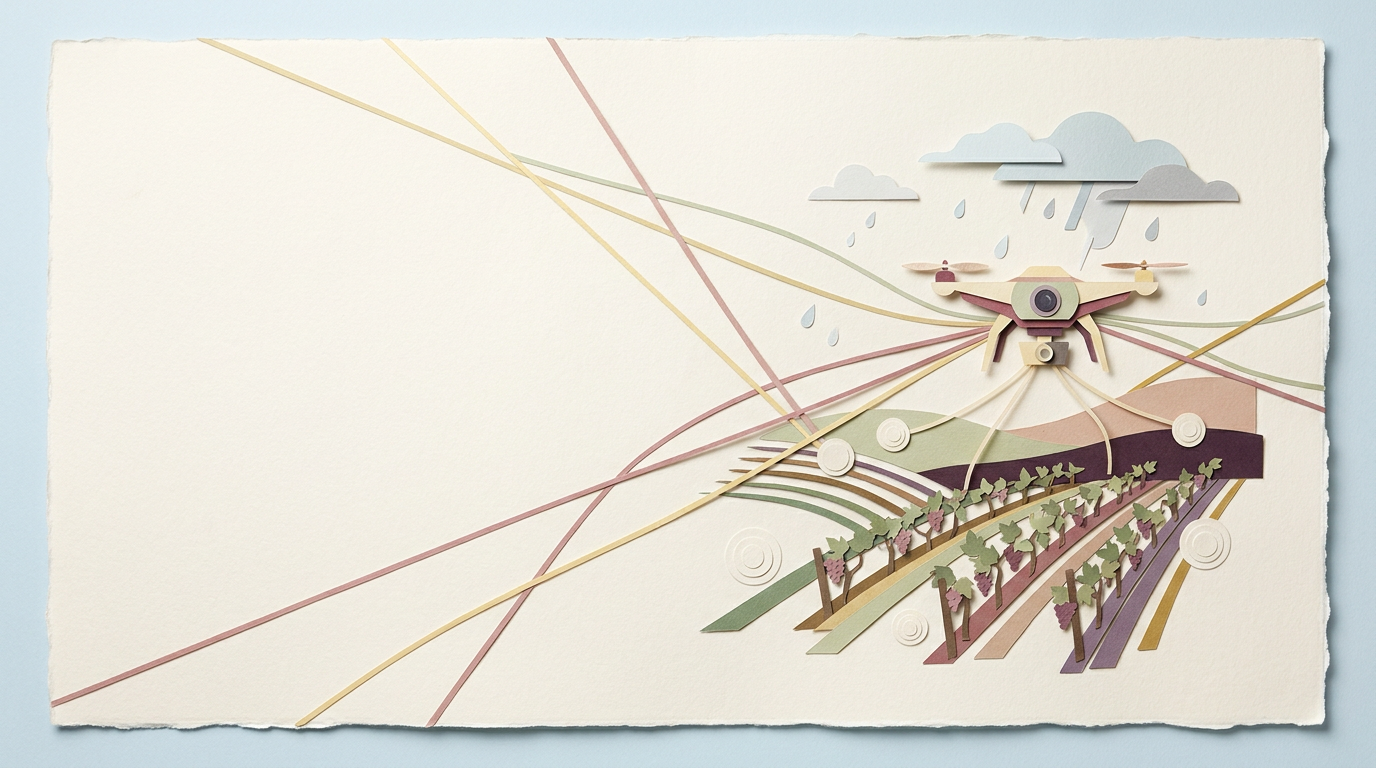
What the tool is about
California agriculture is dealing with several pressures at once. The source highlights a wet El Niño outlook, water-management concerns and wine-marketing challenges. New crop-protection drone technology is appearing against this backdrop.
A drone is an uncrewed aircraft controlled remotely or with some degree of automation. The “crop-protection” label indicates that this technology is intended to help protect cultivated plants. However, the available material does not identify the developer, a specific model, the crops involved or the current stage of deployment. It also does not say whether this is a commercial product, an experimental system or a demonstration.
How it works
The source excerpt does not explain how the drone operates. It is unclear whether the system is designed for spraying, monitoring, data collection or another crop-protection task. No information is provided about flight time, payload, sensors, automation, accuracy or water use.
That gap matters because the word “drone” alone does not reveal which vineyard operation the tool could replace or support. To judge its practical value, growers would need to know what task it performs, the conditions in which it can operate and how much human supervision it requires. Based on the information provided, its efficiency and potential savings cannot be quantified.
Why it matters for vineyards and wineries
The development may be relevant to California grape growers because it arrives when water management is receiving increased attention. In principle, a new crop-protection tool could change how field visits, treatments or labor are organized. The source does not demonstrate, however, that this particular drone reduces water demand, costs or working time.
The wet El Niño outlook is also a planning consideration, not a guaranteed weather outcome. Vineyard managers should therefore avoid drawing conclusions from the “drone” label alone. Before purchasing or testing such a system, they would need technical specifications, local vineyard experience, operating costs and information about the rules governing its use. Drone technology would not, by itself, address the wine-marketing challenges also mentioned in the source.
For wineries that manage their own vineyards, the most immediate implication is the need to assess the technology as part of a wider operational decision. Its value would depend on whether it solves a defined field problem and fits existing staff, equipment and management practices. None of those points can yet be confirmed from the available material.
What to watch next
The next meaningful signal would be a detailed product description, a vineyard trial or comparable results from commercial operations. Key questions include exactly which crop-protection job the system performs, how it works under changing weather conditions, and whether its water, time or cost requirements are reported.
It will also be important to learn whether the technology is commercially available, what training operators need and which restrictions apply to its use. Until those details emerge, growers and winery managers do not have enough evidence for a reliable investment decision.
The original source is AgNet West.
Related articles
More stories from the same topic area.
Back to news Policy
Review maps the role of AI, robotics and IoT in Indian agriculture
A structured literature review examines how artificial intelligence, robotics and the Internet of Things are being applied and integrated across Indian agriculture. Covering mechanisation, crop monitoring, irrigation, harvesting, food processing and livestock management, it considers current advances, challenges and future prospects.
Frontiers in Plant Science · 24 November 2026 · 2 min read
 Technology
Water, Wine Marketing and Drone Technology Shape California Agriculture
California agriculture is preparing for a wet El Niño outlook while water management, wine marketing and crop-protection drones all draw attention. The available source does not provide details about the technology’s capabilities or the scale of its industry impact.
Bing News – Wine Marketing Technology · 21 November 2026 · 2 min read
 Technology
Digital Tools and Storytelling in US Wine Marketing
According to a podcast listing published by Wine Industry Advisor, episode 2836 covers tools, technology and storytelling for wine marketing in the digital age, with particular attention to the US wine market. The full episode content was not available in the supplied excerpt.
Wine Industry Advisor · 11 November 2026 · 2 min read